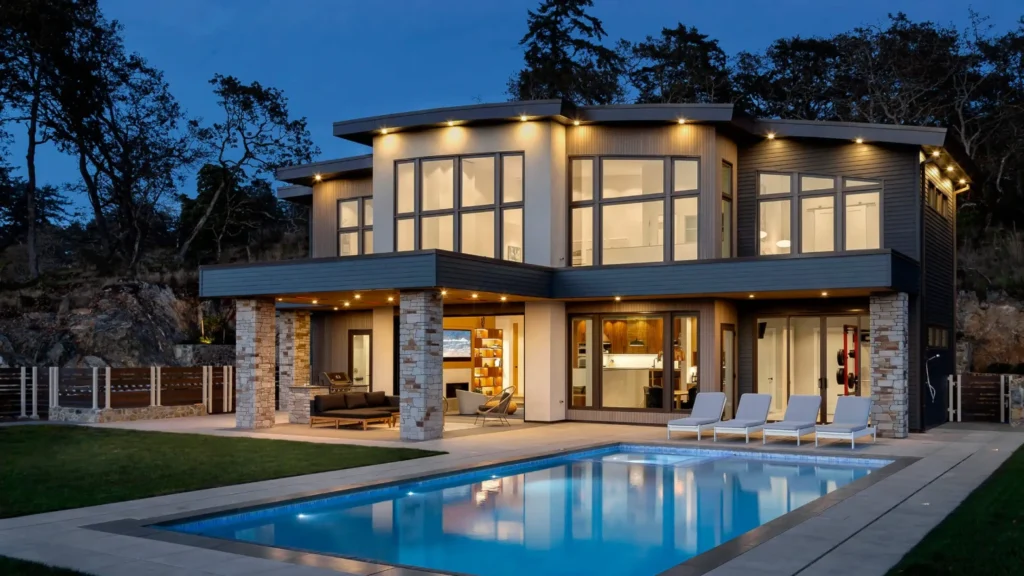
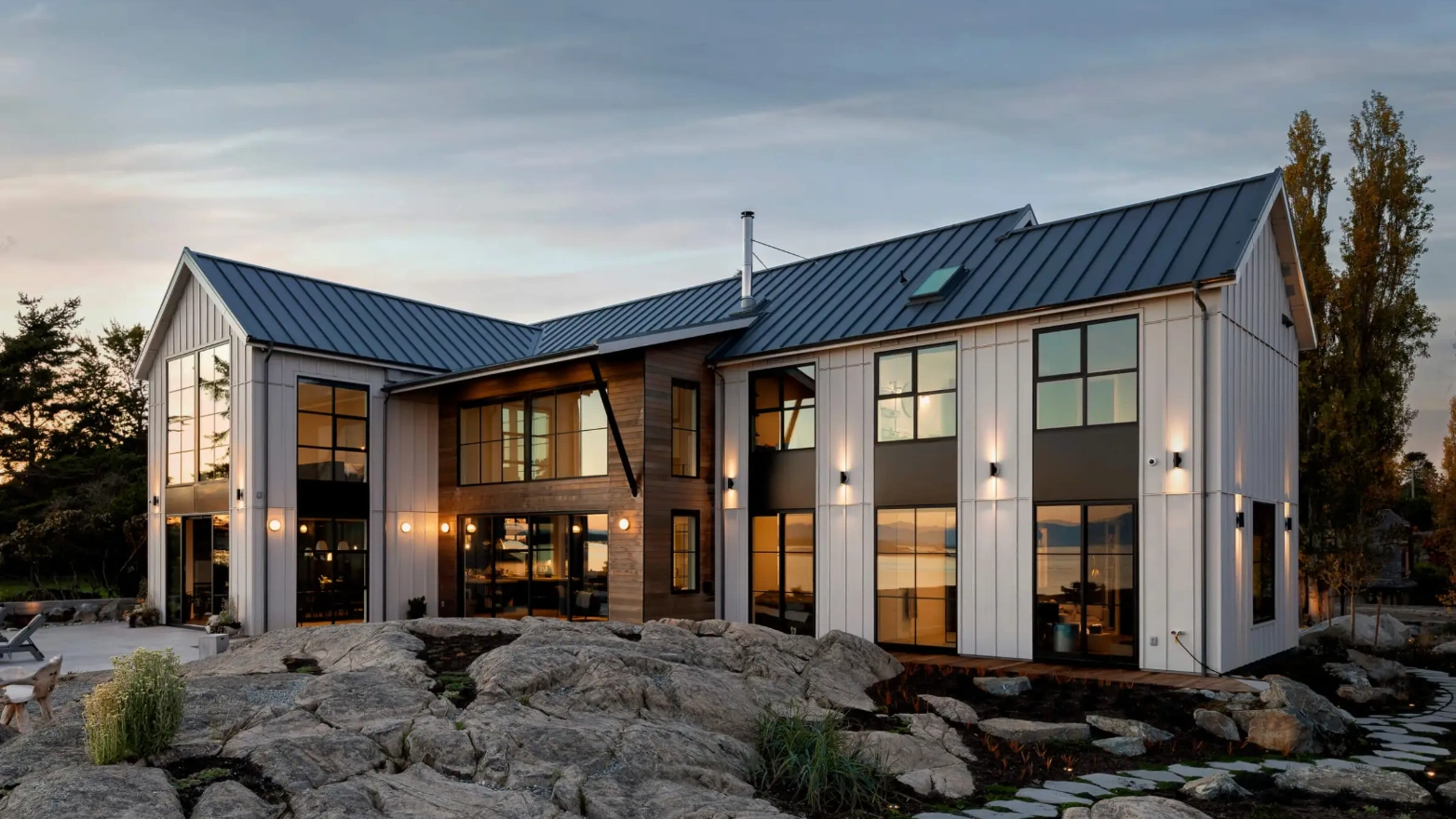
Luxury custom homes on Vancouver Island succeed or fail before excavation. Learn how disciplined pre-construction planning, constructability reviews, and value management protect design intent and reduce costly retrofits.
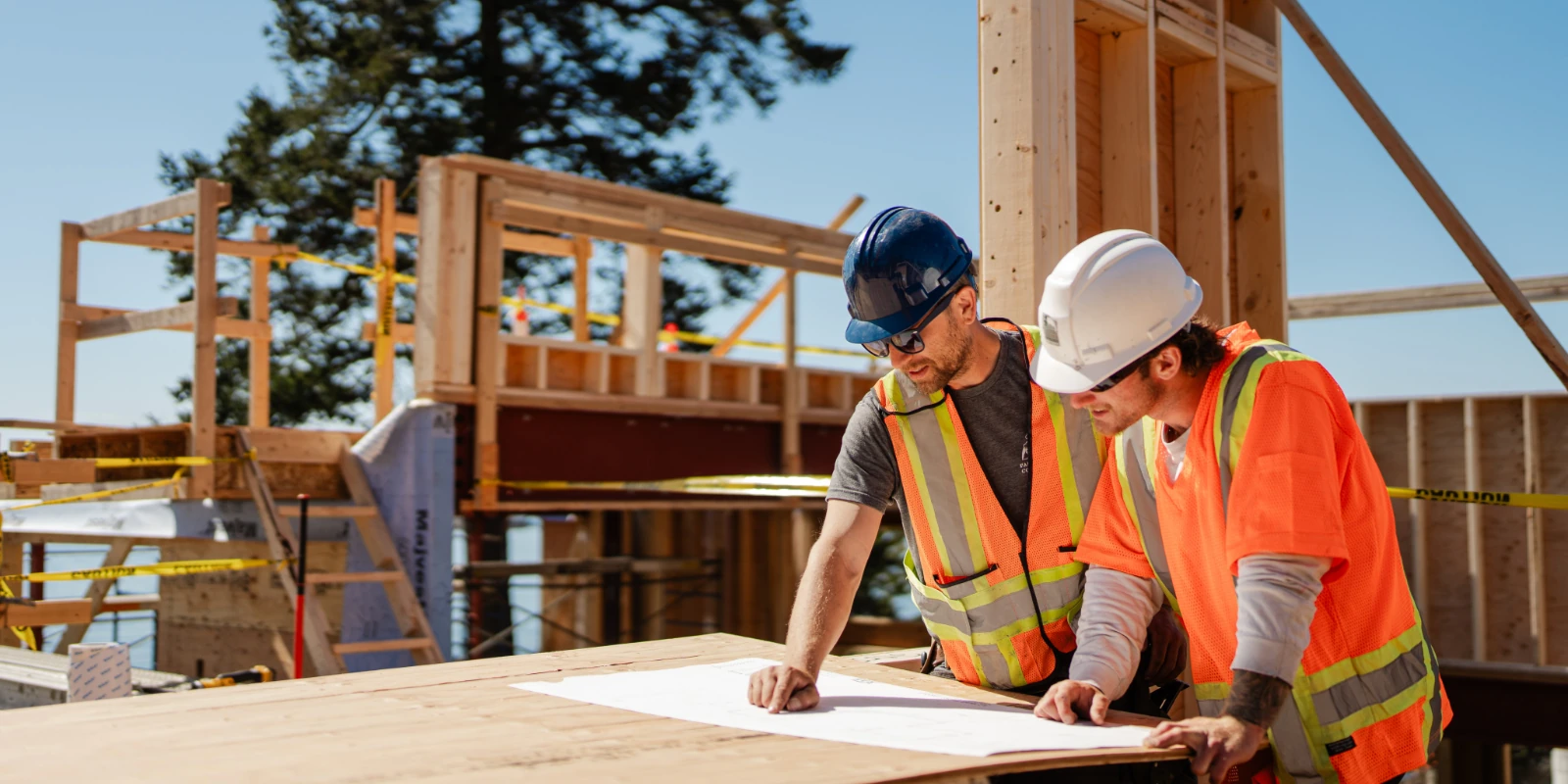
A luxury home build can look smooth from the outside and still carry quiet compromises inside the walls. The most expensive regret is rarely a single decision. It’s the accumulation of late discoveries: a mechanical issue that was never truly resolved, a window detail that works on paper but not in the field, a “temporary” budget choice that permanently changes the feel of the architecture.
At Falcon Heights in Victoria BC, we start with a rigorous pre-construction process, where planning replaces guesswork, and we keep stakeholders aligned through clear documentation and a shared project portal. The outcome is a home that reflects the original vision and holds up to scrutiny over time.
Pre-construction is not a single meeting or an estimated budget number.
Pre-construction is a disciplined phase where the owner, the design team, project consultants and the builder pressure-test the project early on, when changes are still affordable, and design flexibility is still high. In practical terms, this phase typically includes:
For design partners, the goal is simple: protect design intent through execution rather than compromise it later.
Designers or architects are usually trying to achieve the same set of outcomes, even when the style varies:
The pain points that threaten those values are familiar: builders who skip the pre-construction process from the start, leaving teams to deal with cut corners, ignored drawings, and a lack of technical sophistication for complex specs.
Pre-construction is where those risks become manageable, because the team can resolve the hard questions before they become expensive problems later on.
Lifestyle-driven planning is not a mood board exercise. It’s where you test the project vision against daily reality: utilities, service zones, storage needs, garage logic, air circulation, lot sight lines, and how the home behaves when it is in daily use.
Done early, it prevents the classic retrofits and “we should have thought of that” changes that show up when construction is already underway.
The highest-stakes decisions are often invisible: electrical capacity, mechanical routing (often, the space required for mechanical can be twice what was originally allotted for), chases, and future-ready pathways (conduit, access, rough-ins). These choices are easy to plan for at the beginning, but brutally hard to retrofit.
Pre-construction planning creates room for the systems that support the design, without forcing last-minute compromises later.
When budgets tighten, the wrong approach is a rushed set of cuts that quietly changes the experience of the home. Value management is different. It documents options that preserve intent: where to invest, where substitutions are truly equivalent, and which “savings” will cost you later in performance, durability, or feel.
Ensuring “constructability” is where we make sure that minor misalignments don’t become budget or deadline overruns. A detail can be technically possible on paper but still be difficult to execute consistently without the right sequencing, trade coordination, and mock-ups.
During Schematic Design, Falcon Heights provides an early constructability, pricing, and performance review. We look at envelope strategy, window and door integration, structure, MEP routing concepts, and site logistics to make sure that the final plans are achievable.
Procurement is not separate from design. It is a design variable.
In pre-construction, we surface long-lead risks early and provide a procurement preview, including anticipated lead times, a targeted mock-up list, and a preliminary schedule with a clear critical path.
Our role flexes with the project, but the discipline stays consistent: early technical leadership, aligned documentation, and clear workflows.
As the design progresses, we:
Throughout, we support transparent collaboration through project-specific communication protocols and a shared project portal, so decisions and documentation stay organized and accessible for the full team.
Local context changes the risk profile. Site constraints such as seasonal weather, permitting realities, and access logistics can shape design decisions early. For partners working outside Victoria, builder input during design development can help prevent late pivots and unplanned scope.
Pre-construction is where local reality becomes a plan, not a surprise.
If you are in Schematic Design or Design Development for a custom home or whole house renovation on Vancouver Island and want to reduce downstream compromise, start with a pre-construction conversation. We will come back with the key risks to resolve early, the opportunities to protect the design through execution, and whether a deeper pre-construction strategy is the right fit.
Early, ideally during design development, while decisions are still flexible. The goal isn’t to “price-check” a concept, but to validate constructability, performance implications, and procurement risks before the drawing set multiplies. Waiting to engage a builder doesn’t save money if it means discovering you’ve drawn 40% more house than the budget supports and now face wasted design fees, lost time, and painful scope reductions to get back on track. Early pre-construction involvement aligns scope with budget from the start, so the home you’re designing is one you can actually build.
Value management protects the experience and design intent by documenting smart options. Cutting scope is reactive and often creates regret later on.
The highest-risk interfaces: envelope strategy, window and door integration, structural approach, and MEP routing concepts, plus site logistics and sequencing implications.