A coastal or difficult Vancouver Island lot can offer extraordinary views, privacy, and connection to the landscape. These lots can also bring technical, environmental, and logistical demands that need to be understood before construction starts.
On sites shaped by steep slopes, rock, tree cover, salt air, wind-driven rain, difficult access, or shoreline considerations, the land itself becomes one of the most important parts of the project. The land can affect design decisions, permitting, engineering, budget, sequencing, material choices, and long-term durability.
Building successfully in these conditions requires disciplined planning, technical expertise, and early coordination. Since 2009, our team has worked on complex Vancouver Island sites where careful planning and strong trade relationships are essential to managing constraints without losing sight of the design intent.
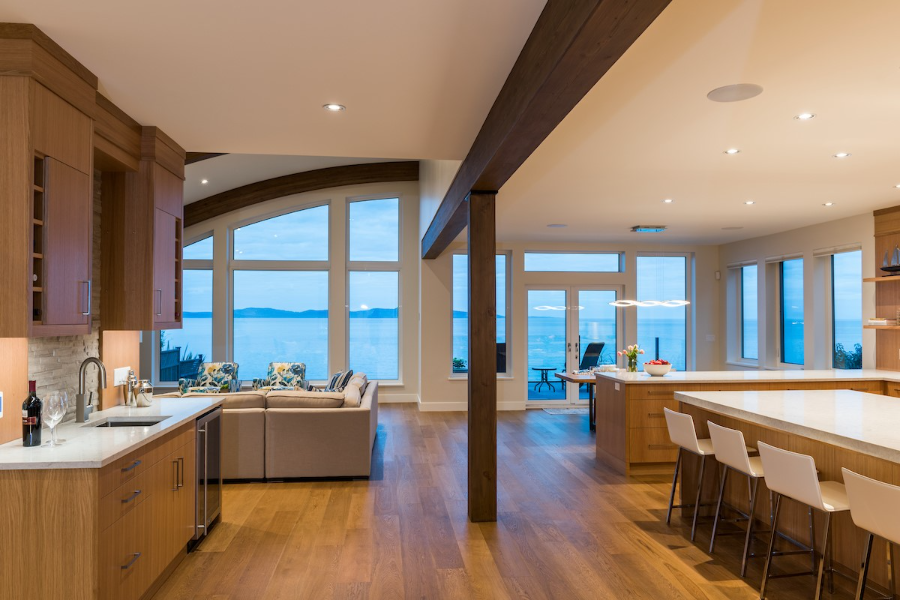
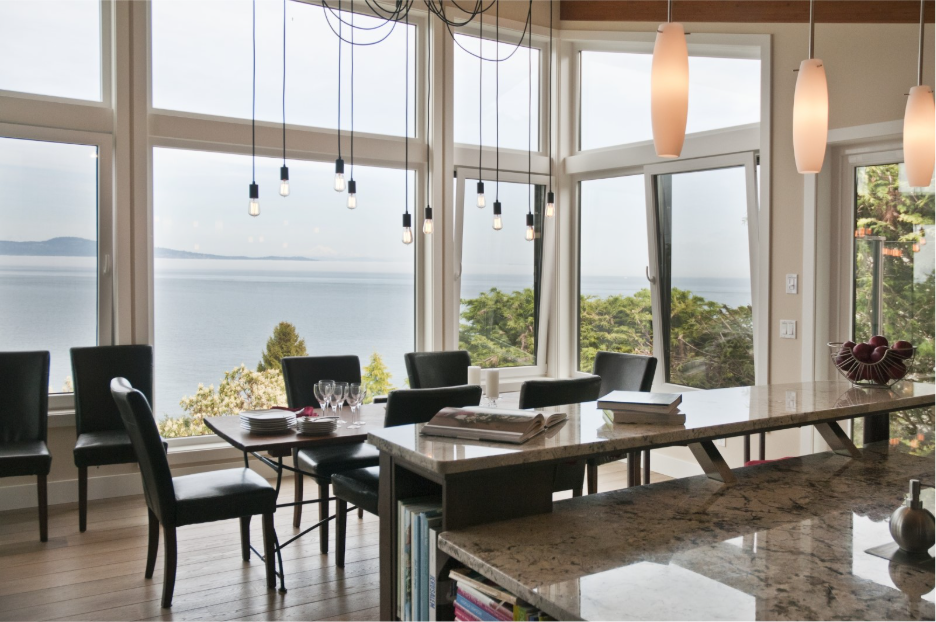
The view, the light, the privacy, and the feeling of being connected to the water or the surrounding landscape are all part of the appeal of a coastal property. Those qualities are part of what makes these Vancouver Island properties so desirable. They also come with exposure.
Salt air, wind-driven rain, storm conditions, moisture, and changing weather patterns can all influence how a home should be planned, detailed, and built. The view may be the reason a homeowner falls in love with the property, but the exposure often shapes many of the construction decisions.
On a coastal site, we need to think carefully about how the home will handle water, wind, corrosion, drainage, and long-term maintenance. Exterior materials, flashing details, window and door assemblies, structural connections, mechanical systems, and the overall building envelope may all be impacted.
A coastal project doesn’t need to feel compromised. Technical planning simply needs to support the vision.
Coastal properties aren’t the only sites that require extra planning. Across Greater Victoria and Vancouver Island, residential lots can include rock, slopes, tight access, heavy tree cover, irregular building areas, rural conditions, and limited space for staging or equipment.
A steep or rocky lot can influence where the home sits, how the foundation is designed, how equipment reaches the site, and how water moves across the property. A heavily treed site may require careful planning around access, root protection, daylight, drainage, and the relationship between the home and the landscape. A rural or semi-remote property may raise practical questions around deliveries, trade scheduling, temporary services, and construction sequencing.
Projects such as Beach Life in Saanich show how terrain can dramatically shape a build. Perched on a 60-degree hillside with ocean views, the home required careful coordination so the design could respond to the slope, preserve the connection to the landscape, and still meet Platinum Built Green performance goals.
In our experience, these site conditions need to be understood before design decisions become too fixed. A home that looks straightforward on paper can become much more complex once excavation, access, drainage, or retaining requirements come to light.
When those realities are identified ahead of time, our team can plan around them.
Coastal and difficult sites bring additional permitting, environmental, or municipal considerations. Depending on the property, a project may involve shoreline setbacks, tree retention, stormwater management, geotechnical review, environmental protection, riparian or sensitive-area requirements, or other site-specific constraints.
Requirements can also vary significantly from one municipality to another. A project in Saanich, Oak Bay, Victoria, Metchosin, the Highlands, or Central Saanich may involve different review processes, documentation needs, and site considerations. A build that is straightforward in one area may require additional steps in another.
We prioritize early review. If municipal or environmental requirements aren’t understood until later in the process, they can affect design, budget, schedule, and consultant coordination. They may also create pressure to make decisions quickly, when a more thoughtful approach would have been possible earlier.
The Perch in the Highlands is an example of how site conditions shape the entire process. Set within an ecologically sensitive coastal forest environment, the home was planned around natural rock formations, native landscaping, distant ocean views, and a careful approach to minimizing site disruption.
Early planning helps our team, the homeowner, and the design team understand what constraints are known, what still needs investigation, and what level of coordination may be required.
On a coastal or challenging property, early review is where planning replaces guesswork.
Before construction begins, our team looks at the technical conditions that may shape the build. We also look at the realities of how the ground behaves, how water moves, how access and staging will work, what foundation or retaining strategies may be needed, and which materials or details need to respond to coastal exposure.
For homeowners, review can reduce uncertainty around cost, schedule, access, and site constraints. For designers, it helps protect design intent by making sure technical requirements are understood before the design becomes difficult to adjust. For the full project team, it creates a clearer path from concept to construction.
Challenging sites often inspire ambitious design. A homeowner may want to capture a specific view, preserve mature trees, create indoor-outdoor connections, build into a slope, expose natural rock, or orient the home around light, privacy, and landscape.
Those are the details that can make a home feel deeply connected to the land. They are also the details that need technical support.
Protecting design intent on a complex site means understanding how the architecture, structure, sitework, building envelope, and construction sequence affect one another. A large window may influence structural requirements, energy performance, and installation details. A terrace or deck may affect drainage, waterproofing, and access. A retaining wall may influence grading, planting, circulation, and the way the home meets the land.
Our team works alongside designers, engineers, consultants, and trusted trades to ensure these connections can be discussed early. Those relationships help bring practical construction insight into the planning process, making it easier to identify what is needed to build well while retaining the ambition of the design.
When technical constraints are brought forward, we can solve them carefully instead of making rushed compromises on-site.
Logistics are part of the construction strategy on a complex Vancouver Island lot.
Some sites have limited room for material storage, trade parking, equipment movement, waste removal, or temporary protection. Others may involve steep driveways, narrow roads, nearby neighbours, shoreline conditions, or limited access for cranes and delivery vehicles. These details may not be as exciting as the design itself, but they can have a major impact on how smoothly the project moves forward.
Access and staging can affect when materials are ordered, how trades are scheduled, where equipment can be placed, and how the site is protected during construction. Poor sequencing can lead to delays, damaged materials, rework, or unnecessary disruption.
We look at these conditions in advance because they influence the rhythm of the build. Long-standing relationships with trusted trades are essential on constrained sites.
Scheduling, access, deliveries, equipment, and sequencing need to be coordinated with people who understand the standards of the project and the realities of working on difficult terrain. When those logistics are planned with the same care as the design details, the work is easier to coordinate and the homeowner has a clearer understanding of how the project will unfold.
Near the coast, durability depends on more than selecting attractive exterior materials. The home needs to be detailed so it can manage wind, rain, salt air, and moisture over time.
The building envelope is especially important. Walls, roofs, windows, doors, cladding, flashing, drainage planes, air and vapour control, and ventilation all need to work together. If one part is overlooked, the home may be more vulnerable to water intrusion, air leakage, corrosion, or premature wear.
Coastal exposure can be hard on fasteners, hardware, exterior finishes, railings, decks, and mechanical components. The right material choices depend on the site, the design, the exposure level, and the homeowner’s maintenance expectations.
For our team, these decisions are part of how the design is protected over time. A home should look beautiful when it is finished, but it also needs to keep performing after years of weather, seasonal change, and daily use.
A challenging site creates more moving parts, dependencies, and decisions.
Clear communication keeps site complexity manageable. Homeowners need to know which constraints have been identified, what still needs investigation, what decisions are coming, and how site conditions may affect cost, schedule, or design details. Designers and consultants need current information so they can coordinate their work. Trades need clear expectations before work begins on-site.
Shared documentation through our Project Portal helps keep drawings, decisions, site issues, and change orders visible as the build evolves. Transparency reduces assumptions and gives everyone involved in the build a clearer foundation for decision-making.
Good communication is part of how the project stays organized on a complex property.
Coastal and challenging Vancouver Island lots can support remarkable homes, but they rarely reward guesswork. The same conditions that make a site beautiful can also make it technically demanding.
Success depends on understanding the land, coordinating the right expertise, planning access and sequencing, and detailing the home for long-term performance in a coastal climate. We have built our process around early coordination, technical problem-solving, and long-standing trade relationships that help complex projects move from design intent to finished home.
If you are considering a new home or whole-house renovation on a coastal or challenging lot in Greater Victoria, Southern Vancouver Island, or the Gulf Islands, an early conversation with our team can help clarify site constraints, planning requirements, and the level of coordination needed before construction begins.
What should be reviewed before building on a coastal or difficult site?
Early review may include geotechnical input, drainage and stormwater planning, environmental or arborist considerations, access, staging, delivery constraints, retaining or foundation requirements, envelope exposure, and material choices suited to the site.
Why does early builder involvement matter on a challenging lot?
Early builder involvement helps connect the design vision with the practical realities of construction. Our team can help identify site constraints, sequencing issues, access challenges, and technical details before they create pressure during construction.
Do coastal lots require different materials or detailing?
Often, yes. Salt air, wind-driven rain, moisture, and exposure can affect exterior finishes, hardware, fasteners, windows, doors, decks, railings, and envelope details. The right choices depend on the site, the design, and the homeowner’s maintenance expectations.
Can a challenging site still support an ambitious design?
Yes. Challenging sites can support remarkable homes when constraints are understood early, and the right expertise is coordinated. Careful planning protects design intent while giving the team a clearer path for construction.